About AMA




A few years after the end of WWII, revealed the unmatchable expertise of various Japanese Martial Arts. Besides the rigid code of honour of feudal Japan exercised such a marked influence upon the world, that the practice of "Budo" (Martial Arts) flourished with unprecedented popularity.
Sensei Pervez Mistry, at the age of 19, opened his doors to students of Martial Arts in 1964, when he was a student himself. He first learned Judo under Sensei Barodawala, and later under Sensei Kawano, 6th DAN from Japan. Judo was his first foray into the mysterious fighting arts of the east; Ju-Jitsu, Aikido and ultimately Okinawan Goju-Ryu Karate would follow in a lifetime of teaching and continuous learning.
In 1960, he started teaching at the famous Talwalkars Gym in Santacruz thanks to Madhukar Talwalkar. Three years later he opened his own classes at his residence with just two students. This was the beginning of his AMA - Academy of Martial Arts, India.
Read moreWith the help of his first student Sensei Burge Cooper, Sensei Mistry secured a scholarship for further training in Japanese Martial Arts at the prestigious "All Japan Budo Federation, Seibukan in Kyoto, Japan. Under the direction of Sensei Masafumi Suzuki 10th DAN or Kancho (Principal), he studied Judo, and Karate-do and finally achieved his 2nd degree (DAN) Black Belt in Judo and a 1st DAN in Karate.
Sensei Mistry, Sensei Burge Cooper and Sensei Shyam Kotak formed the All India Karate-do Federation alongwith Sensei RVT Mani of Madras (now Chennai) in 1973. In 1977, Sensei Mistry joined and trained under Sensei Morio Higaonna, then 7th Dan. In 1979, in London, England, Sensei Higaonna formed the IOGKF or International Okinawan Goju Ryu Karate-do Federation. Along with other Instructors from around the world, Sensei Mistry was also present at this historic event.
Since 1973, the AMA has taught the Military and para-Military forces of our Country, namely the ITBP (Indo Tibetan Border Police), CRPF (Central Reserve Police Force), BSF (Border Security Force), The 9th Dogra Regiment of the Indian Army and the Naval Commandos of the Indian Navy. AMA has also taught students from various schools and colleges as well as security personnel of several institutions in India.
Sensei Mistry has written a book on a breathing Kata called SANCHIN (three battles) which is the hallmark of the Goju-Ryu Okinawan Karate, under the subheading "The Anatomy of Physiology of Sanchin Kata". This book has also been translated into Spanish.
In 2022, at Okinawa, Sensei Pervez Mistry was presented with his 9th DAN. This recognition is a result of his lifetime of teaching and propagating Okinawan Goju-Ryu Karate.
Today, at the age of 80+ years, and after more than 61 years of unwavering dedication, Sensei Pervez Mistry still trains and teaches Okinawan Goju Ryu Karate-do in Mumbai, India, and is also now an International Instructor teaching and imparting his knowledge at IOGKF Gasshaku’s (training camps) around the world.
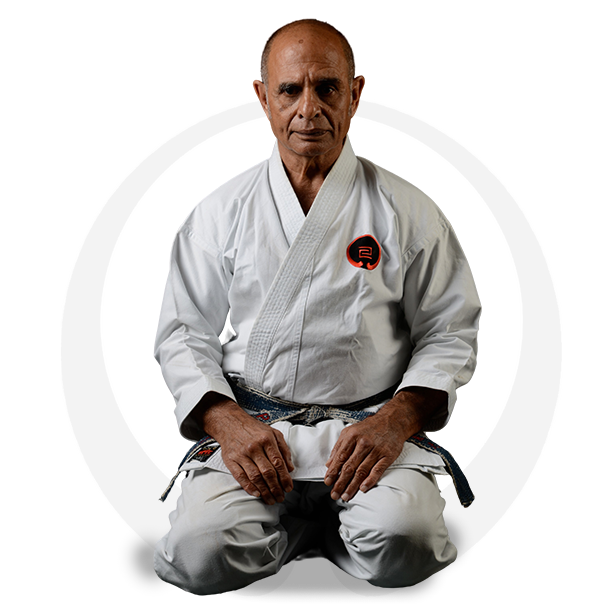
Pervez B. Mistry is a pioneering martial artist, author, and teacher, widely acknowledged as the Father of Karate-do in India. His lifelong dedication to the traditional martial arts of Okinawa and Japan, particularly Goju-Ryu Karate, has played a central role in introducing, nurturing, and institutionalizing authentic Karate practice across India.
A trailblazer in every sense, Sensei Mistry was among the earliest Indians to receive formal instruction in traditional Karate-do directly from renowned masters in Okinawa and Japan. Through decades of disciplined training, he earned the respect and recognition of the global martial arts community, becoming a key figure in preserving and transmitting the essence of Budo—the martial way—in its truest form.
In 1968, long before martial arts gained mainstream popularity in India, Sensei Mistry established some of the country’s first formal dojos (training halls), laying the foundation for Karate’s structured growth. His teachings went beyond physical technique; he emphasized the ethical, philosophical, and internal dimensions of Karate, especially through the study of Sanchin and Tensho kata—two foundational forms of Goju-Ryu that encapsulate the "Three Battles" of body, mind, and spirit.
Read moreA passionate educator and mentor, Sensei Mistry has trained thousands of students over the decades, many of whom have gone on to become champions, instructors, and ambassadors of Karate-do in their own right. His students—and their students—form a vast legacy, spanning generations and continents.
An accomplished author, he has written extensively on traditional breathing methods, kata interpretation, and the deeper meditative aspects of Karate. His internationally acclaimed book, Sanchin: Three Battles - The Anatomy and Physiology of Sanchin Kata, is regarded as a seminal work on the spiritual and physical dynamics of Goju-Ryu Karate, blending historical insight, practical instruction, and personal reflection.
Despite his many accolades, Sensei Mistry remains a humble practitioner, always referring back to the values of respect, perseverance, and self-mastery that lie at the heart of true martial arts. His contribution to Karate-do in India is not merely one of instruction but of vision—ensuring that future generations inherit not just a system of combat, but a path to character, discipline, and harmony.
In 2023, at Okinawa, Sensei Pervez Mistry was presented with his 9th DAN. This recognition is a result of his lifetime of teaching and propagating Okinawan Goju-Ryu Karate.
To preserve and transmit authentic Okinawan Goju-Ryu Karate-do as taught by the IOGKF, developing disciplined, humble, and sincere practitioners who pursue lifelong training, self-improvement, and responsible conduct in both the dojo and daily life.
be a better person today than you were yesterday
- Nakamura Sensei
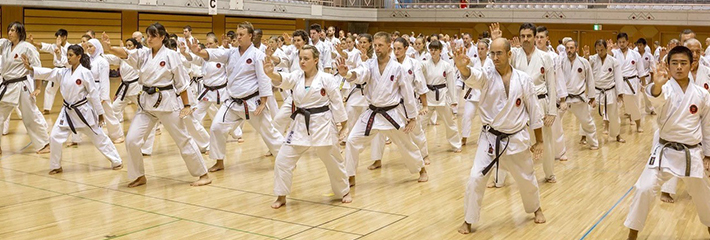
Academy of Martial Arts (AMA)

Tetsuji Nakamura Sensei
IOGKF Chief Instructor and Chairman
IOGKF International Administrative Office
5125 Harvester Road, Unit 7, Burlington, Ontario,
CANADA, L7L 6A2

IOGKF India (Academy of Martial Arts)

Pervez Mistry Sensei (Kyu Dan)
Founder and Advisor to IOGKF International
The B J P C Institution Jr. College,
33, Maharshi Karve Road,
Girgaon, Mumbai - 400004, India.
Shibu Dojos in India (Dento Budo Karate)

Vipul Naik Sensei (Go Dan)
+91-9821468552
St. Joseph High School,
2nd Navrozi Hill Road, Umerkhadi,
Mumbai-400009
Timings:
Thu & Sat - 4.30 to 5.30 PM
| Sun - 9.30 to 11 AM

Shibu Dojo (The BJPC Instituition)

Jagdish Chawda Sensei (Go Dan)
+91-9820130563
The B J P C Institution Jr. College,
33, Maharshi Karve Road, Mumbai - 400004, India.
Timings:
Thu & Sat - 5.30 to 6.30 PM
| Sun - 9.30 to 10.30 AM
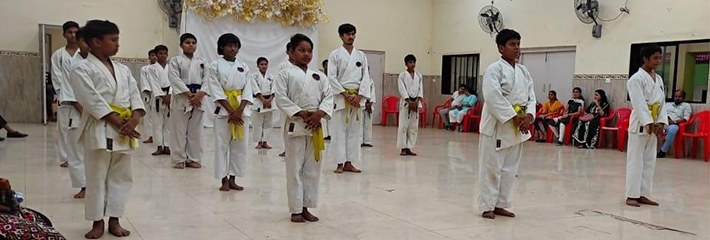
JK Martial Arts Academy
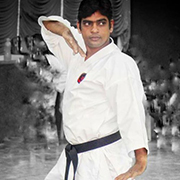
Jameel Khan Sensei (Yon DAN)
+91-8898548876
Grih Kalyan Kendra Hall,
Sector 7, Antop Hill, Wadala East, Mumbai-400037
Timings:
Tue, Thur, Sat & Sun - 7 to 9 PM
NANA DAN
Zeenat Mistry
ROKU DAN
D. B. Rai
Neville Mistry (Honorary Roku Dan)
GO DAN
Jagdish Chawda
Shekhar Bhangera
Vipul Naik
Rohinton Patel
Anurag Toshniwal
Kersi Khambatta
Bomi Dastur
Navin Mahadeshwar
YON DAN
Dinshaw Daruwala
Hitesh Parikh
Sundar Narasimhan
Jameel Khan
Vishal Thakkar
Yazdi Batliwala (Honorary Yon Dan)
SAN DAN
Anand Modi
Zarthun Zend
Prashant Kancheria
Uni
NI DAN
Jerxis Vandervala
Amit Modi
Ayesha
Gunvant Shah
Vikram Kapadia
Shambhavi Sakhare
Nasim Shaikh
SHO DAN
Adan Bebal
Deonchris Selvaraj
Atif Sayyed
Asim Sayyed
Jisshan Sayyed
Shriyans Gaikwad
Raman Kanojiya
Ravi Rajan